


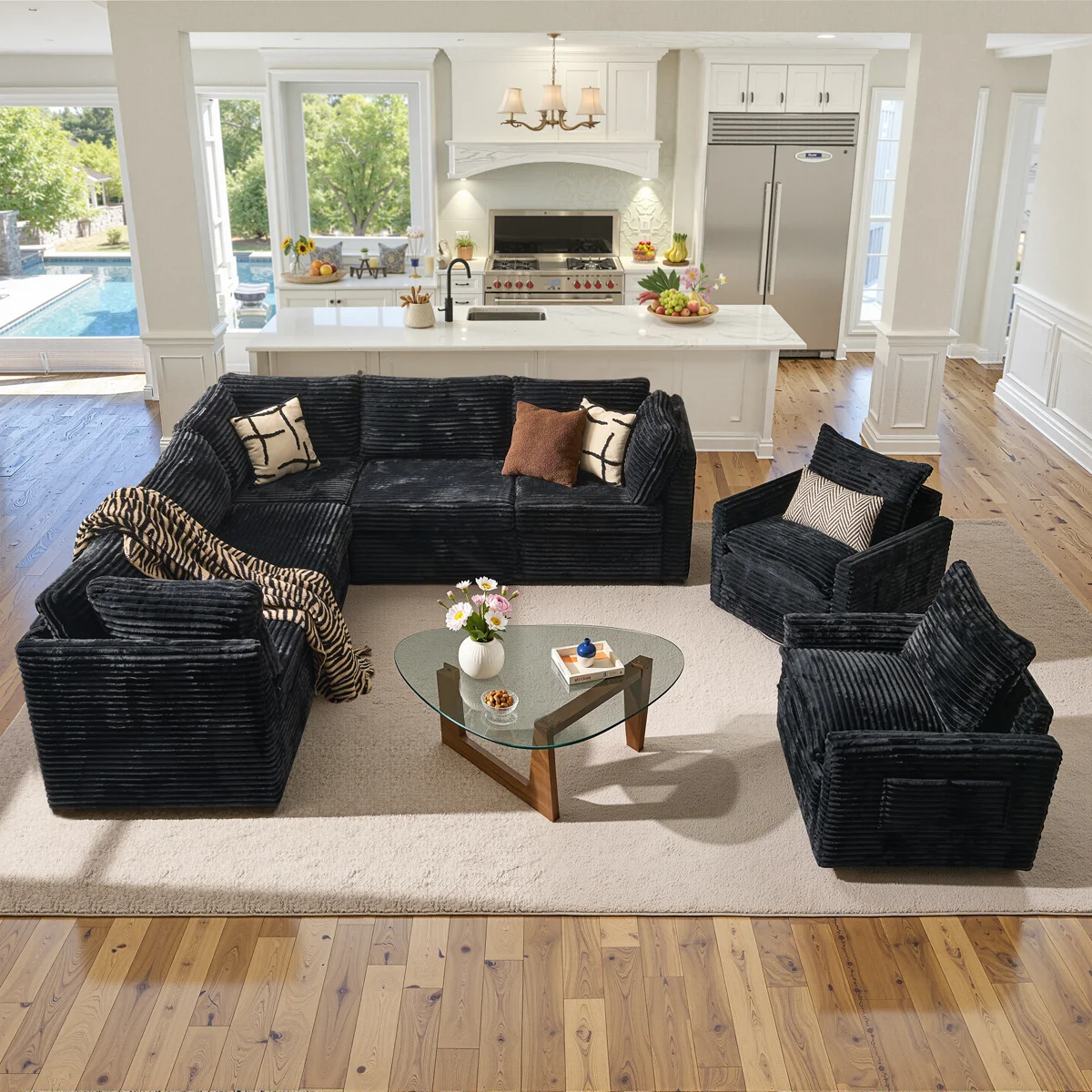
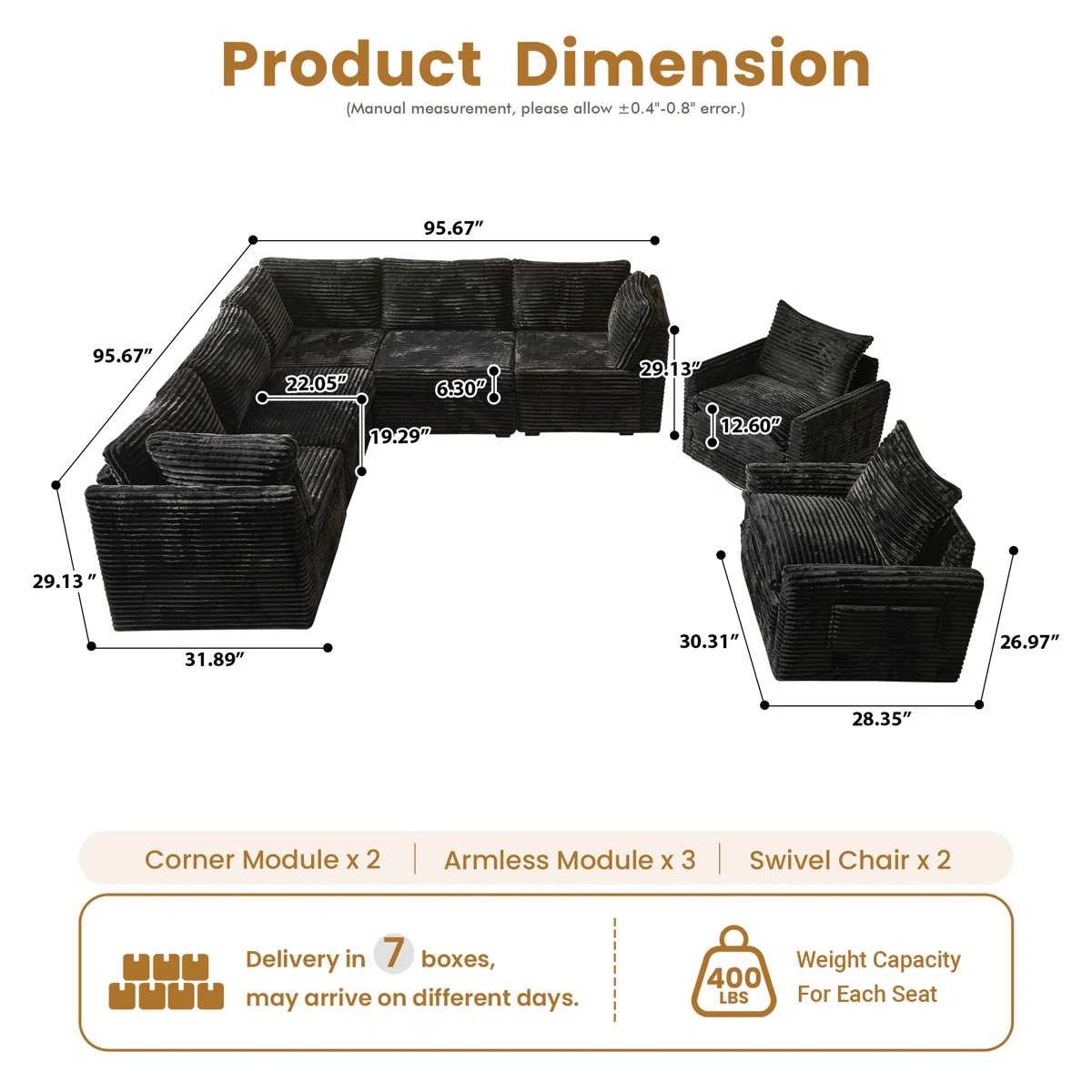
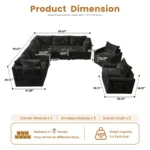



4-Piece Living Room Set – Modular Sectional Sofa
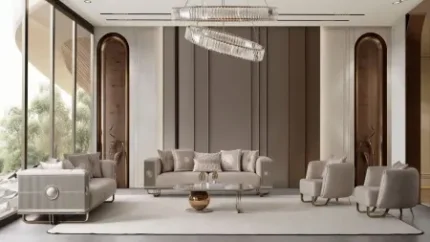
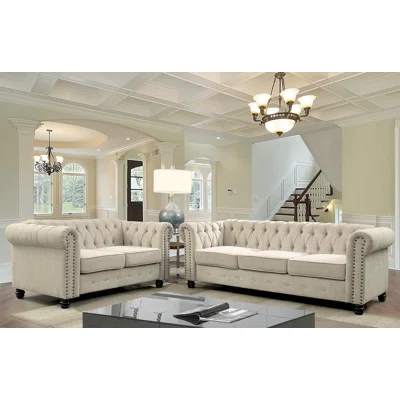
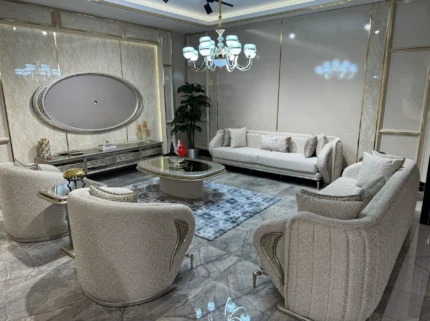
A 4-Piece Living Room Set – Modular Sectional Sofa is an excellent choice for homeowners who want comfortable seating, modern style, and flexibility in one coordinated furniture solution. A living room is one of the most frequently used spaces in a home, so choosing the right sofa set requires more than simply selecting a design that looks attractive. The right furniture should fit the available space, support your lifestyle, provide comfortable seating, and complement the overall appearance of your home.
A modular sectional sofa is especially useful because it is made from separate sections that can often be arranged in different configurations. Depending on the specific design, modular pieces can create an L-shaped arrangement, a larger family seating area, a more open configuration, or another layout suitable for your room. This flexibility is one of the main reasons modular sectional sofas are increasingly popular for modern homes.
If you are looking for stylish living room furniture for your home, explore the collection at Exotic Homes Furnitures: https://exotichomesfunitures.com/.
What Is a 4-piece Living Room Set – Modular Sectional Sofa
A 4-piece living room set is a coordinated furniture arrangement consisting of four primary pieces or components. The exact pieces included can vary depending on the furniture collection, so shoppers should always review the individual product specifications before purchasing.
A modular sectional sofa set may include multiple seating modules that connect together to form the main sofa arrangement. The purpose of a coordinated set is to make it easier to create a unified living room without having to purchase every major furniture piece separately.
Instead of finding a sofa, sectional component, and additional seating individually and trying to make everything match, a coordinated living room set gives you a starting point with complementary shapes, materials, and colors.
This can make decorating easier, especially for homeowners who want a polished appearance without spending excessive time trying to coordinate unrelated furniture.
What Makes a 4-piece Living Room Set – Modular Sectional Sofa Different?
The biggest difference between a modular sectional and a traditional fixed sofa is flexibility.
A traditional sofa normally has one permanent shape. A traditional sectional may also have a predetermined configuration.
A modular sectional is constructed from individual components that can potentially be rearranged. Depending on the design, these pieces may be configured into different shapes and layouts.
For example, a modular sectional may be arranged as:
- An L-shaped sectional
- A larger family seating arrangement
- A straight sofa
- A corner configuration
- An open-ended seating arrangement
- A customized arrangement based on the available modules
However, it is important not to assume that every modular sectional has unlimited configuration possibilities. The actual flexibility depends on the manufacturer’s design, connectors, module types, and available components.
Before purchasing, check whether the specific sofa allows the type of rearrangement you want.
Why Choose a 4-piece Living Room Set – Modular Sectional Sofa?
One of the biggest benefits of modular furniture is adaptability.
Your home may change over time.
You may move into a larger home, rearrange your living room, renovate your space, add furniture, or simply decide that you want a different seating arrangement.
A modular sofa can potentially adapt to these changes more easily than a fixed configuration.
This makes modular furniture particularly attractive for people who value flexibility.
It can also be useful when moving because individual modules may be easier to carry through doorways, hallways, staircases, and other restricted areas than one extremely large sofa. Nevertheless, buyers should still measure the delivery path before ordering.
Choosing the Right Size
One of the most important decisions when purchasing a sectional sofa is choosing the appropriate size.
A sectional should provide enough seating without overwhelming the room.
Before choosing a 4-piece living room set, measure:
- The length of your living room
- The width of your living room
- Available wall space
- Doorways
- Hallways
- Stairways
- Windows
- Existing furniture
- Television location
- Walking paths
Do not rely solely on product photographs.
A sofa can look relatively compact in a large showroom or professionally photographed room but appear much larger in your own home.
Measure the Delivery Path
Many furniture buyers remember to measure their living room but forget to measure the path the furniture must take to get there.
This can create problems on delivery day.
Measure:
- Front doors
- Interior doors
- Hallways
- Staircases
- Elevator openings
- Tight corners
- Building entrances
Modular furniture can offer an advantage because individual components may be easier to move. However, every piece still needs to fit through the available access points.
Checking package dimensions before purchasing is therefore an important part of responsible furniture shopping.
Planning Traffic Flow
A beautiful living room can become uncomfortable if furniture blocks the natural walking paths.
Think about how people move through the room.
For example:
Entrance → Living room → Kitchen
or:
Living room → Bedroom hallway
or:
Sofa → Television → Kitchen
The furniture should allow people to move around without constantly walking into chairs or squeezing between the sofa and walls.
A current sectional buying guide recommends maintaining meaningful clearance for major walkways and ensuring that the furniture does not overwhelm the room.
Choosing an L-Shaped Configuration
An L-shaped modular sectional is one of the most versatile configurations.
It can work particularly well when:
- The sofa is positioned near a corner
- You want to maximize seating
- The room is medium-sized
- You have an open-plan living area
- You want to create a defined seating zone
The longer section can provide the main seating area while the shorter section creates additional seating or lounging space.
Choosing a U-Shaped Configuration
A U-shaped arrangement generally requires more floor space.
It can work well in:
- Large family rooms
- Spacious living rooms
- Entertainment rooms
- Open-plan homes
- Homes where people frequently entertain
The advantage of a U-shaped configuration is that it can create an enclosed conversation area.
The disadvantage is that it requires more space and may make a smaller room feel crowded.
Modular Sectionals for Small Living Rooms
A modular sectional can work in a smaller living room if the configuration is carefully planned.
The key is choosing an appropriately sized arrangement.
Instead of trying to fit the largest possible sectional into the room, consider how much seating you actually need.
You may want to use:
- A compact configuration
- An L-shaped arrangement
- A smaller coffee table
- Minimal side furniture
- A wall-mounted television
- A smaller area rug
The goal is to maximize comfort without sacrificing movement.
Modular Sectionals for Large Living Rooms
Large living rooms can present a different challenge.
If furniture is too small, the room can feel empty and unfinished.
A larger modular sectional can help establish a strong visual centerpiece.
You can then complement it with:
- Accent chairs
- Swivel chairs
- Coffee tables
- Side tables
- Large rugs
- Floor lamps
- Artwork
The important thing is maintaining proportion.
Modular Furniture for Open-Plan Homes
Open-plan homes often combine the kitchen, dining area, and living room into one large space.
This creates freedom but can also make it difficult to define individual areas.
A modular sectional can help create a visual boundary.
For example, positioning a sectional with its back toward the dining area can naturally establish the living room without requiring a physical wall.
A large area rug can reinforce the seating zone.
Choosing Comfort
Comfort should be one of the highest priorities when selecting a sofa.
Consider:
- Seat depth
- Seat height
- Cushion firmness
- Back support
- Armrest height
- Upholstery texture
- Overall seating width
A sofa may look beautiful but still be uncomfortable for everyday use.
If possible, sit on the sofa before purchasing.
If buying online, carefully review the dimensions and product specifications.
Understanding Seat Depth
Seat depth determines how much room you have from the front of the seat to the back cushion.
Deeper seats are often preferred by people who enjoy lounging.
Shallower seats can be more suitable for upright sitting.
There is no single ideal seat depth for everyone.
Your height and sitting preference should influence the decision.
Understanding Seat Height
Seat height also affects comfort.
A very low sofa can create a relaxed lounge appearance but may be more difficult for some people to get in and out of.
A higher seat can provide a more traditional sitting position.
Consider who will use the furniture most frequently.
Cushion Firmness
Some homeowners prefer firm cushions because they provide a supportive sitting surface.
Others prefer softer cushions because they create a more relaxed lounging experience.
The right choice depends on your lifestyle.
If the sectional will primarily be used for watching movies and relaxing, a softer feel may be appealing.
If it will be used for conversations and formal seating, stronger support may be preferable.
Choosing Upholstery
The upholstery is one of the most important elements of a sofa.
It affects:
- Appearance
- Comfort
- Texture
- Maintenance
- Durability
- Cleaning requirements
Common upholstery categories include:
- Polyester
- Chenille
- Velvet
- Microfiber
- Linen blends
- Performance fabrics
- Leather
- Faux leather
Different materials have different characteristics.
Choose based on how you expect to use the furniture.
Choosing Furniture for Families
A family living room typically experiences frequent daily use.
The sofa may be used for:
- Watching television
- Reading
- Playing games
- Relaxing
- Hosting friends
- Family conversations
- Children’s activities
Families should therefore consider durability and maintenance in addition to appearance.
Choosing Furniture for Homes With Pets
Pets can influence upholstery decisions.
Consider whether the material is appropriate for:
- Pet hair
- Scratching
- Frequent cleaning
- Everyday activity
Some fabrics may make pet hair more noticeable, while others may be easier to maintain.
Always follow the manufacturer’s specific care instructions.
Choosing the Right Color
Color can completely change the atmosphere of a living room.
Neutral furniture is popular because it can complement many interior styles.
Popular neutral colors include:
- Beige
- Cream
- Gray
- Taupe
- Brown
- Black
More expressive colors can make the sectional the focal point of the room.
Examples include:
- Navy
- Green
- Burgundy
- Terracotta
- Deep blue
The best color depends on your existing walls, flooring, curtains, rugs, lighting, and décor.
Benefits of Neutral Furniture
Neutral furniture provides decorating flexibility.
For example, a beige modular sectional can work with:
- Brown wood
- Cream accessories
- Green plants
- Black accents
- Earth-tone décor
A gray sectional can work with:
- White
- Navy
- Black
- Green
- Natural wood
This means you can change smaller decorative items without replacing your main furniture.
Creating a Modern Living Room
A modern living room usually benefits from simplicity and clean visual lines.
A modular sectional can become the main focal point.
Complete the room with:
- A simple coffee table
- Modern lighting
- A neutral rug
- Minimal accessories
- Contemporary artwork
Avoid overcrowding the room.
Creating a Luxury Living Room
A luxury appearance is often created through coordination rather than simply purchasing the most expensive furniture.
Focus on:
- Proportion
- Texture
- Lighting
- Cleanliness
- Quality accessories
- Coordinated colors
A large modular sectional can establish the foundation.
Accent chairs can add visual balance.
A large rug can connect the seating arrangement.
Layered lighting can create warmth.
Creating a Cozy Living Room
Comfortable furniture is the foundation of a cozy room.
Add:
- Soft pillows
- Throws
- Area rugs
- Warm lighting
- Curtains
- Plants
- Personal artwork
Different textures can make a neutral room feel more inviting.
Using a Coffee Table
A coffee table is often the centerpiece of a seating arrangement.
Choose a size and shape that complements your sectional.
Possible shapes include:
- Rectangle
- Square
- Round
- Oval
A round coffee table can soften the strong lines of a large sectional.
A rectangular coffee table can work naturally with a long sofa.
The most important consideration is accessibility and room to move around it.
Using an Area Rug
An area rug can visually connect the sectional and other seating.
Instead of making the furniture look like separate objects, the rug can create a defined seating zone.
The rug should be appropriately sized for the room.
A very small rug underneath a large sectional may make the arrangement feel disconnected.
Adding Side Tables
Side tables can provide convenient surfaces for:
- Drinks
- Books
- Lamps
- Phones
- Remotes
- Decorative objects
Do not add more tables than the room can comfortably accommodate.
Lighting the Living Room
Lighting plays an important role in interior design.
Consider using multiple sources:
- Ceiling lighting
- Floor lamps
- Table lamps
- Natural daylight
- Accent lighting
Multiple sources allow you to change the mood of the room throughout the day.
Positioning Furniture Around Windows
Large windows can become a natural focal point.
Avoid blocking them unnecessarily.
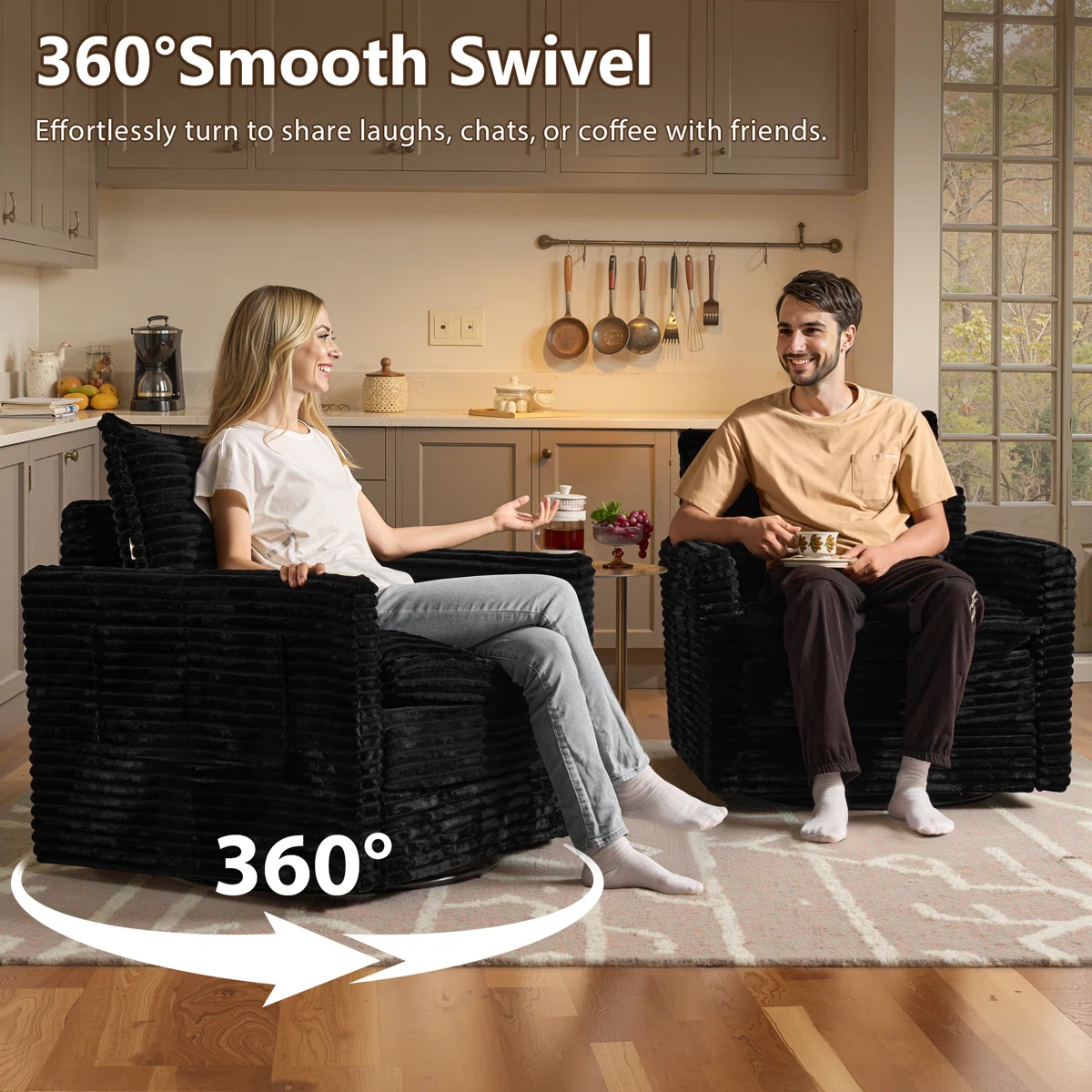
A swivel chair can be positioned near a window to create a comfortable reading area.
The sectional can remain oriented toward the main seating zone.
Positioning Furniture Around a Television
If television viewing is important, arrange your seating so that the screen can be viewed comfortably.
Consider:
- Viewing angle
- Screen height
- Natural light
- Glare
- Seating distance
- Speaker placement
A swivel chair can be turned toward the television when needed.
Creating a Conversation Area
A living room should not always be designed around television viewing.
If you frequently entertain guests, consider creating an arrangement where people can easily see each other.
The sectional can form one side.
Additional chairs can face the sectional.
A coffee table can sit in the center.
This encourages conversation.
Creating a Reading Area
One modular or accent seating position can become a dedicated reading space.
Add:
- A floor lamp
- Small side table
- Books
- Comfortable seating
A swivel chair can be especially useful because it can face the reading lamp and then rotate toward the rest of the room.
Furniture for Movie Nights
A modular sectional can provide generous seating for family movie nights.
Consider:
- Cushion comfort
- Viewing angles
- Lighting
- Coffee-table accessibility
- Remote storage
The furniture should still function well when the television is turned off.
Furniture for Entertaining Guests
When entertaining, seating flexibility is valuable.
A modular sectional can provide the primary seating.
Additional chairs can increase capacity.
The arrangement should allow guests to interact rather than forcing everyone to face the television.
Checking the Modular Connection System
The connectors are an important part of modular furniture.
They help keep the individual sections aligned.
Before purchasing, find out:
- What type of connectors are used
- Whether they are included
- Whether modules can be separated
- Whether pieces can be rearranged
- Whether the configuration remains stable
The quality of the connector system can affect how practical the modular design is during everyday use.
Checking Frame Construction
The frame supports the furniture.
Depending on the product, frames can incorporate materials such as:
- Hardwood
- Plywood
- Engineered wood
- Metal
- Other structural materials
Do not evaluate construction solely by appearance.
Review the manufacturer’s specifications.
Checking Cushion Construction
Cushion construction influences comfort and long-term performance.
Look for information about:
- Foam
- Fiber
- Springs
- Cushion density
- Removable covers
- Reversible cushions
Different constructions produce different seating experiences.
Caring for Your Sectional
Regular maintenance can help your furniture remain attractive.
Basic maintenance may include:
- Vacuuming
- Removing crumbs
- Spot cleaning
- Fluffing cushions
- Rotating cushions when appropriate
- Checking connectors
- Checking legs and moving components
Always follow the manufacturer’s care instructions.
Cleaning Upholstery
Never assume that every upholstery fabric can be cleaned in the same way.
Some fabrics may require specific cleaners or professional care.
Before cleaning:
- Check the manufacturer’s instructions.
- Identify the upholstery material.
- Test any approved cleaning method according to the manufacturer’s guidance.
- Avoid unsuitable chemicals.
- Avoid excessive moisture unless specifically permitted.
Protecting Furniture From Everyday Wear
Furniture is designed to be used, but proper care can help maintain its appearance.
Avoid:
- Standing on cushions
- Jumping on the sofa
- Dragging the sectional unnecessarily
- Applying unsuitable chemicals
- Overloading moving components
Use the furniture according to its intended purpose.
Furniture for Different Lifestyles
A modular sectional can be suitable for different lifestyles.
For Families
Prioritize seating capacity and easy maintenance.
For Couples
Focus on comfort and proportion.
For Entertainers
Prioritize seating flexibility.
For Apartment Owners
Pay close attention to dimensions and delivery access.
For People Who Move Frequently
Consider the benefits of individual modular pieces.
For Interior Design Enthusiasts
Look for configuration flexibility.
Modular Sectional Versus Traditional Sofa
A traditional sofa is generally simpler.
It provides one fixed seating arrangement.
A modular sectional offers more flexibility but may involve more components and a more complex construction.
The right option depends on your home.
If you expect your layout to change, modular furniture may offer more value.
If your room has a permanent layout, a traditional sofa may be sufficient.
Modular Sectional Versus Fixed Sectional
A fixed sectional generally arrives in a predetermined configuration.
A modular sectional uses individual components.
A fixed sectional can be simpler.
A modular sectional can be more adaptable.
Neither is universally better.
Your decision should be based on how much flexibility you actually need.
Why Furniture Proportion Matters
Furniture should relate to the size of the room.
A large sectional requires enough surrounding space.
A small sectional may need additional furniture to balance a large room.
The same principle applies to the coffee table, rug, chairs, and accessories.
Good proportion helps the room feel intentional.
Avoiding an Overcrowded Room
More furniture does not automatically create a better living room.
An overcrowded room can become difficult to navigate.
Before adding another piece, ask:
Does this furniture serve a purpose?
Does it improve the room?
Does it block movement?
Does it fit the scale of the other furniture?
If the answer is no, you may not need it.
The Importance of Empty Space
Empty floor space is valuable.
It provides:
- Better movement
- Visual breathing room
- Easier cleaning
- A more spacious appearance
Do not feel pressured to fill every empty corner.
Creating a Balanced Interior
Balance can be achieved through:
- Furniture placement
- Color
- Lighting
- Texture
- Scale
A large sectional can be balanced by two chairs or other visually substantial pieces.
A dark sofa can be balanced with lighter walls or a lighter rug.
A plain room can gain interest through artwork and textured accessories.
How to Style a Neutral Sectional
If your sectional is neutral, use accessories to introduce personality.
For example:
Beige sectional
Add:
- Brown pillows
- Green plants
- Natural wood
- Cream rug
Or:
Gray sectional
Add:
- Navy pillows
- White accessories
- Black lighting
- Natural wood
This creates a cohesive interior without making the sofa overpowering.
Creating a Minimalist Living Room
Minimalism does not mean having an empty room.
It means choosing furniture intentionally.
A modular sectional can work well with minimalist design if the room contains:
- Limited accessories
- Clean lines
- Neutral colors
- Hidden storage
- Open floor space
Creating a Transitional Interior
A transitional room combines traditional and contemporary elements.
A modern sectional can be paired with:
- Traditional artwork
- Warm wood
- Classic lamps
- Neutral rugs
- Decorative accessories
This can create a balanced look.
Creating a Contemporary Interior
Contemporary interiors often use:
- Modern furniture
- Neutral colors
- Strong shapes
- Natural textures
- Simple artwork
A modular sectional is naturally suited to this aesthetic.
Creating a Family-Friendly Living Room
A family-friendly room should be attractive but practical.
Choose furniture that can handle everyday use.
Create clear walking paths.
Provide storage.
Choose appropriate upholstery.
Use rugs to define the seating area.
Add decorative elements that can be maintained easily.
Designing a Guest-Friendly Living Room
A guest-friendly living room should have comfortable seating and enough space for conversation.
Avoid positioning every seat toward the television.
Use the sectional and chairs to create an interactive arrangement.
Provide easy access to side tables.
Use warm lighting.
How to Make Your Furniture Look More Expensive
Presentation matters.
Keep the furniture clean.
Use a large enough rug.
Coordinate colors.
Add layered lighting.
Use appropriate artwork.
Avoid clutter.
Add texture.
Maintain clear walking paths.
These details can significantly improve the overall appearance of a living room.
Buying Furniture Online
Online furniture shopping can be convenient, but shoppers should read product information carefully.
Check:
- Dimensions
- Materials
- Upholstery
- Included pieces
- Assembly
- Delivery
- Warranty
- Return policy
- Care instructions
Never assume that accessories shown in photographs are included.
Understanding Product Photographs
Furniture photography can sometimes make pieces appear different in size or proportion.
Use the actual dimensions to judge whether the product fits your home.
Compare the dimensions with your existing furniture.
If necessary, mark the furniture footprint on the floor using removable tape.
This can help you visualize the size before ordering.
Planning With Floor Tape
One simple method for visualizing furniture is to use painter’s tape.
Measure the sofa dimensions.
Mark the approximate footprint on the floor.
Walk around the taped area.
Place imaginary locations for chairs and tables.
This can help you understand whether the room will feel crowded.
Planning Your Living Room in Stages
Start with the sectional.
Then add chairs.
Then the coffee table.
Then the rug.
Then lighting.
Then accessories.
This approach makes it easier to maintain proportion.
Why You Should Not Buy Everything at Once
Buying every accessory before placing the main furniture can lead to overcrowding.
Your sectional determines the scale of the room.
Once it is positioned, you can make better decisions about:
- Rug size
- Coffee table size
- Side tables
- Lighting
- Artwork
- Accessories
Long-Term Furniture Value
When evaluating a furniture purchase, consider more than the initial price.
Think about:
- How often you will use it
- How long you expect to keep it
- Whether it fits your lifestyle
- Whether it can adapt to your home
- How easy it is to maintain
- Whether replacement or additional components are available
A flexible piece can provide value beyond its appearance.
When a Modular Sectional Makes Sense
A modular sectional may be particularly useful when:
- Your room layout changes
- You move frequently
- Your family is growing
- You entertain regularly
- You have an open-plan home
- You want flexible seating
- You enjoy rearranging furniture
If none of these factors apply, a fixed sofa or sectional may also be a good option.
Questions to Ask Before Buying
Before purchasing your 4-piece living room set, ask:
What exactly is included?
What are the dimensions of each piece?
Can the modules be rearranged?
How do the modules connect?
What upholstery is used?
How should the upholstery be cleaned?
What materials are used in the frame?
What type of cushion construction is used?
What assembly is required?
What are the package dimensions?
Can the furniture fit through my doors?
What is the warranty?
What is the return policy?
These questions help you make an informed purchase rather than relying only on appearance.
Frequently Asked Questions
Is a 4-piece living room set good for a family?
It can be an excellent option when the set provides sufficient seating and fits the room comfortably. Always check the exact dimensions and configuration.
What is the advantage of a modular sectional?
The main advantage is flexibility. Modular pieces can often be rearranged to suit different room layouts and changing needs.
Can a modular sectional be used in a small living room?
Yes, provided you select a configuration that matches the available space.
Is a modular sectional good for an open-plan home?
Yes. It can help define the living area while maintaining an open connection to surrounding spaces.
What should I measure before buying a sectional?
Measure the room, available floor space, doors, hallways, stairs, and other delivery paths.
Are modular sofas easy to move?
Individual modules can often be easier to maneuver than one very large sofa, but you should still check the dimensions of each piece.
What color sectional should I choose?
Choose a color that complements your walls, floors, curtains, rug, lighting, and overall decorating style.
How do I make a sectional look luxurious?
Focus on proportion, coordinated colors, quality-looking accessories, layered lighting, texture, and organization.
What should I put in front of a sectional?
A coffee table or ottoman is a common option, provided there is enough space for comfortable movement.
How should I clean my sectional?
Always follow the manufacturer’s upholstery-care instructions.
Is a modular sectional better than a traditional sectional?
It depends on your needs. Modular sectionals provide more flexibility, while fixed sectionals can be simpler for permanent layouts.
Final Thoughts
A 4-Piece Living Room Set – Modular Sectional Sofa can be a practical and stylish centerpiece for a modern home. Its greatest advantage is the combination of seating, coordinated design, and potential flexibility.
The right furniture should not simply look good in a photograph. It should work in your actual living room.
Before purchasing, measure the space carefully. Think about how people move through the room. Consider how many people regularly use the furniture. Review upholstery and maintenance requirements. Check the exact dimensions and included components. Think about delivery access. Most importantly, choose a configuration that supports the way you actually live.
A well-planned modular sectional can become the foundation of a comfortable family room, entertainment area, conversation space, apartment living room, or open-plan interior.
For shoppers looking for living room furniture and home furnishing options, visit Exotic Homes Furnitures at https://exotichomesfunitures.com/.
The goal is simple: choose furniture that brings together comfort, functionality, flexibility, and style while helping you create a living room that feels welcoming and genuinely works for your home.




Reviews
There are no reviews yet.